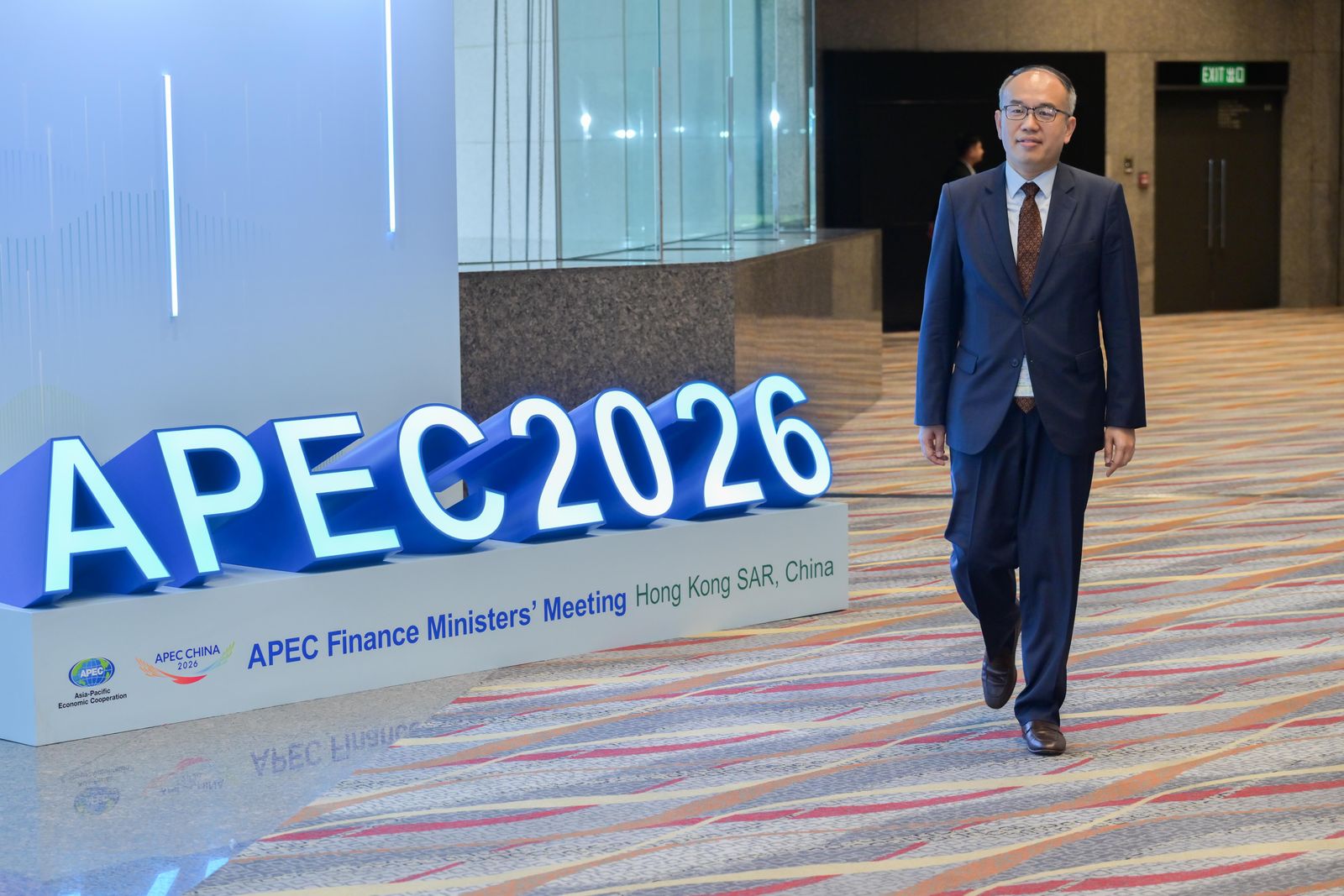
The 33rd APEC Finance Ministers’ Meeting was held in Hong Kong from 20 to 21 October 2026 — the first time Hong Kong has hosted this ministerial-level meeting. The meeting reviewed and adopted the 2026 APEC Finance Ministers’ Joint Statement and the Policy Statement on Digital Infrastructure Financing across the Asia-Pacific Region. The Hong Kong Family Office Institute (FOIHK) considers that this landmark event not only demonstrates Hong Kong’s institutional strengths and hosting capacity as an international financial centre, but also opens new space for global family capital in terms of allocation, succession and cooperation across the Asia-Pacific.
A Key Platform for Asia-Pacific Cooperation Comes to Hong Kong for the First Time
APEC was established in 1989 and currently has 21 member economies, with a combined population of approximately 3 billion and an economic output accounting for over 60% of global GDP, making it a vital engine of global economic growth. This year is “APEC China Year,” with the theme “Building an Asia-Pacific Community to Prosper Together” and the three priorities of “Openness, Innovation, Cooperation”.
The Finance Ministers’ Meeting was hosted by the Ministry of Finance of China and organised by the Hong Kong SAR Government. Lan Fo’an, Minister of Finance of the People’s Republic of China, chaired the meeting. More than 300 delegates from APEC member economies, APEC observers and relevant international organisations participated. The meeting was also the last specialised ministerial meeting before the 33rd APEC Economic Leaders’ Meeting, to be held in Shenzhen on 18–19 November this year, underscoring its significance.
Four Agendas Consolidate Regional Financial Consensus
The meeting focused on four areas: fiscal policy supporting households, digital infrastructure financing, financial access and opportunity for all, and the APEC Young Financial Talents Dialogue. In addition to the two statements, the meeting produced deliverables including the Report on Supporting Households and Investing in Human Capital: Fiscal Policy Considerations for Sustaining Economic Growth in APEC and the Compendium on Financial Access and Opportunity for All. The Joint Statement also reaffirmed the commitment to building an open, dynamic, resilient and peaceful Asia-Pacific community by 2040.
Paul Chan Mo-po, Financial Secretary of the Hong Kong SAR, said after the meeting that, amid a complex geopolitical landscape and fiscal pressures, it was a notable achievement for economies to reach pragmatic consensus and issue a joint statement, which would help Hong Kong’s next steps in promoting more cross-border financing and cross-border corporate listings. The Secretary for Financial Services and the Treasury also noted in a blog post that meeting delegates generally recognised that Hong Kong’s financial market offers a high degree of transparency, robust institutions and well-developed infrastructure, providing a reliable and efficient platform for regional financial cooperation.
During the meeting, the Hong Kong Monetary Authority (HKMA) and the APEC Business Advisory Council (ABAC) co-organised two thematic seminars, respectively exploring finance-driven digital, inclusive and sustainable supply chain ecosystems, and mobilising capital to support nature conservation and regional cooperation.
A World-Class Wealth Hub Widely Recognised Internationally
The event took place as Hong Kong’s wealth management standing reached new heights. Boston Consulting Group’s Global Wealth Report 2026, released in May this year, showed that Hong Kong’s cross-border wealth rose 10.7% year-on-year to approximately US$2.95 trillion in 2025, narrowly surpassing Switzerland (approximately US$2.94 trillion) to become the world’s largest cross-border wealth hub for the first time. The report also projected that Hong Kong’s cross-border wealth would grow at an average annual rate of approximately 9% between 2025 and 2030.
On family offices, Hong Kong currently has more than 3,380 single family offices in operation. Invest Hong Kong has assisted over 200 family offices in establishing or expanding their presence, completing ahead of schedule the target set in the 2022 Policy Address. The 2025 Policy Address set a new target of assisting at least 220 additional family offices to establish or expand in Hong Kong between 2026 and 2028. The on-the-ground presence of international financial officials and industry representatives further attests to Hong Kong’s stability and attractiveness amid global volatility.
Family Office Perspective: Five Implications
1. Macro Stability and Prudent Fiscal Management Reinforce Confidence in Cross-Border Allocation
Since the start of the year, the US Federal Reserve raised rates in September, international oil prices have remained elevated, and some Asian emerging market currencies have come under depreciation pressure. The Joint Statement emphasised fiscal sustainability, macroeconomic stability and prudent public debt management, and reaffirmed the 2021 exchange rate commitments. Guests on Phoenix TV’s current affairs programme Current Affairs Triple Dialogue also noted that free capital flows and financial stability under the Linked Exchange Rate System are important foundations of Hong Kong’s financial position. For families centred on long-term preservation and cross-generational succession, this carries significant reference value.
2. Deepening Offshore RMB Development Enriches Currency Allocation for Family Assets
Hong Kong has operated an offshore RMB business since 2004, for over two decades; the first dim sum bonds were issued in 2007. Hong Kong has the largest RMB liquidity pool outside mainland China, with outstanding dim sum bonds exceeding RMB 1.6 trillion. As RMB internationalisation advances steadily, family offices can more systematically assess the role of RMB-denominated bonds and related products in their portfolios to diversify single-currency concentration risk and align with business and asset positioning in the mainland and the Greater Bay Area.
3. Digital Infrastructure Financing Opens Space for Long-Term Capital Participation
The 2026 APEC Finance Ministers’ Joint Statement noted significant financing gaps in digital infrastructure in some economies, and encouraged the private sector to play an important role in providing funding and technical expertise, as well as developing innovative financing approaches. Paul Chan also stated that Hong Kong could make good use of financing tools such as asset securitisation to channel long-term capital into productive infrastructure projects. Family capital, characterised by its long-term and patient nature, can participate in such opportunities in an orderly manner through private equity, private credit and infrastructure funds, subject to rigorous due diligence.
4. Financial Inclusion and Green Finance Connect Family Businesses with Impact Investing
At the meeting, Paul Chan shared Hong Kong’s experience with the Commercial Data Interchange (CDI) and the HKMA’s Project CargoX: the former facilitates data sharing between enterprises and banks to enhance credit assessment efficiency; the latter integrates cargo and trade data, enabling SMEs to obtain trade financing without relying on physical asset collateral, which drew the attention of regional delegates, and the HKMA is actively promoting cross-border cooperation in related fields. Many family businesses are themselves important links in regional supply chains, and such developments help family businesses expand into Asia-Pacific markets; the advancement of green and sustainable finance also resonates with family philanthropy and impact investing.
5. Youth Financial Talent Exchange Aligns with Family Succession
The Joint Statement welcomed the APEC Young Financial Talents Dialogue and supported in principle the continuation of related cooperation; Paul Chan also said Hong Kong supports continuing the exchange next year and suggested establishing a sustained network among participants. Talent cultivation shares a common philosophy with nurturing the next generation of family leaders. FOIHK has consistently attached importance to the financial literacy and international perspective of next-generation family members, and will continue to support family governance and cross-generational succession through educational and research activities.
Backed by the Motherland, Connected to the World
The Finance Ministers’ Meeting took place after Hong Kong published the First Five-Year Plan for Economic and Social Development of the Hong Kong Special Administrative Region (2026–2030)on 16 September this year, aligning with the development direction of the National 15th Five-Year Plan. As a “super connector” and “super value-adder,” Hong Kong is well positioned to link the industrial and technological momentum of the mainland and the Greater Bay Area — the Shenzhen-Hong Kong-Guangzhou cluster has ranked first globally in the World Intellectual Property Organization’s Global Innovation Index — with international capital and professional services. For global families, Hong Kong is both a gateway to the Chinese market and a platform for positioning in Asia-Pacific and connecting to the world.
Mr. Leo Lai King Man, Founding Chairman of the Hong Kong Family Office Institute, said: “The APEC Finance Ministers’ Meeting being held in Hong Kong for the first time fully reflects Hong Kong’s strength and credibility as an international financial centre. Hong Kong has become the world’s largest cross-border wealth hub, with unique advantages in institutions, markets, professional talent and connectivity to the mainland. The Institute will continue to serve as a platform to promote exchanges and cooperation between family offices and the Government, financial institutions and the professional sector, working together to seize the new opportunities brought by Asia-Pacific regional cooperation.”
FOIHK will subsequently launch thematic content on RMB asset allocation, digital infrastructure investment and family business expansion into global markets. Stay tuned.